Structural Drying in Rockland, MA
Extraction removes liquid water, but wood, drywall and concrete still hold moisture, so the drying team sets air movers and dehumidifiers, reads meters at each visit and removes equipment only at the dry goal. Call now, any hour.
(888) 480-6221Call now to start drying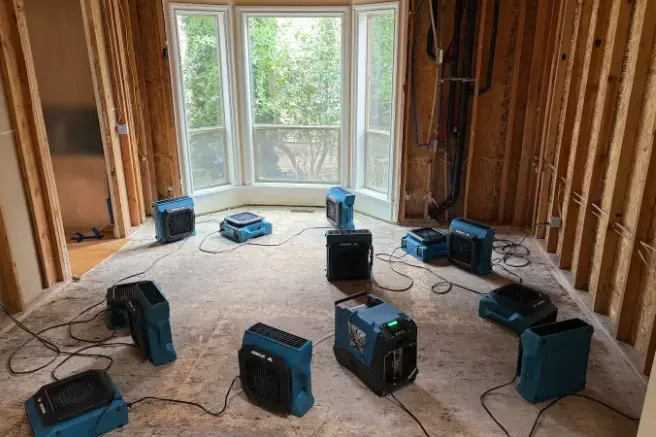
While the structure is still wet
Do now
- 1Keep doors closed. Close doors to the wet rooms so the drying team can control the air in the work area.
- 2Skip the heat blast. Do not aim space heaters or hair dryers at walls, since uneven drying can warp wood.
- 3Hold the repairs. Leave paint, flooring and trim alone until meters show the structure is dry.
- 4Keep a record. Note when the leak was found and keep receipts for emergency steps.
Hold off
- Do not close walls over wet framing
- Do not run household fans alone
- Do not turn off equipment early
How the restoration crew handles structural drying
Drying follows water extraction, and larger buildings are covered under commercial water damage with a plan built around the occupants.
Around-the-clock response
The response team rolls out day and night, storm nights and holidays included, and treats active water as urgent.
IICRC S500 drying standard
The drying team pulls equipment only when meter readings say dry, not when a surface looks dry.
Claim-ready drying records
Moisture maps, daily psychrometric readings and timestamped photos go into one log for the adjuster and the owner.
Older South Shore construction
Fieldstone foundations, plaster walls, cast iron drains and finished basements are everyday work, so the crew checks below grade and behind the walls.
What does structural drying cost in Rockland, MA?
Structural drying commonly costs from $900 for one room at Class 1 or 2 to $4,500 or more when dense Class 4 materials are involved. The size of the wet area and the density of the materials set the price. The drying time estimator gives a rough timeline.
- One room, light class$900 to $1,800
- Single room
- Light materials
- Short equipment run
- Several rooms or basement$1,800 to $3,200
- More rooms wet
- Framing involved
- Longer equipment run
- Dense Class 4 materials$3,200 to $4,500+
- Hardwood or plaster
- Low evaporation
- Specialty drying
Price moves with the water category, the wet square footage, the material class and how quickly drying began. The water damage cost calculator gives a planning range.
The structural drying process, step by step
- 1
Set the targets
Readings from unaffected rooms in the same building become the dry goal for the wet ones.
- 2
Place the equipment
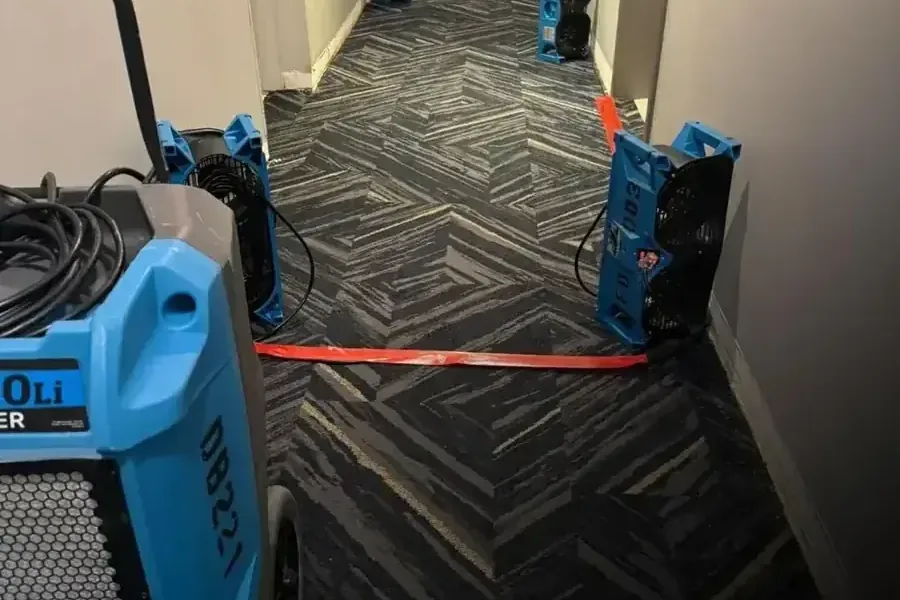
Air movers go along walls and floors, and dehumidifiers go where they can pull moisture from the whole space.
- 3
Check each visit
Meters and a thermal camera show which areas have dried and which still need airflow.
- 4
Remove at goal
Equipment comes out only when every reading is at the goal, and a final report lists the numbers.
Rockland has older converted factory buildings, including the Emerson Shoe Lofts, which sit in the former Codman Building, the largest wood structure in town. No local humidity or drying time figure is claimed, because every building dries according to its own materials.
Why wood and masonry take time
Wood framing, plaster and concrete release moisture slowly. Air movers increase evaporation at the surface, while dehumidifiers remove that vapor so the air can keep absorbing it. Without both, moisture just moves from one material to another.
What the drying plan includes
- Meter readings at set points in walls, floors and ceilings
- Airflow planned around opened cavities and removed materials
- Dehumidifier capacity matched to the volume of wet air
The full process starts at water extraction and ends with a written report. Readings are repeated at the same points each visit so the trend is clear.
Older and historic buildings
The Codman Building is listed on the National Register of Historic Places, so careful, documented drying matters. The crew records what was opened and why. Wood framing holds moisture below the surface, so readings are taken at depth as well as on the face.
Where structural drying is handled around Rockland
Water damage restoration covers Rockland, a Plymouth County town of 17,803 people at the 2020 census, from Union Street and Rockland Center to Beech Hill and the neighborhoods near Accord Pond and Studleys Pond. Homes, apartments and converted factory buildings all get the same S500 drying standard.
Browse the full coverage mapRelated water damage services in Rockland
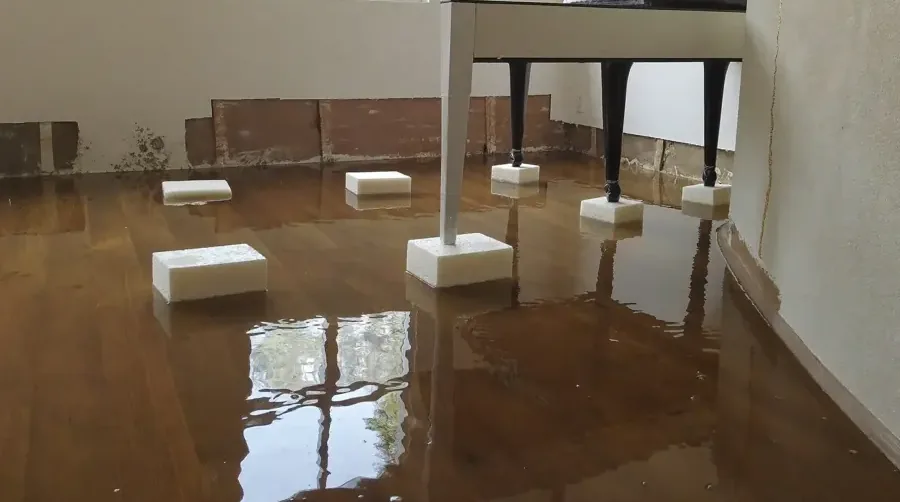 Water Extraction in RocklandTruck mounted and portable units pull standing water off floors and carpet pad before it wicks into framing.See the service
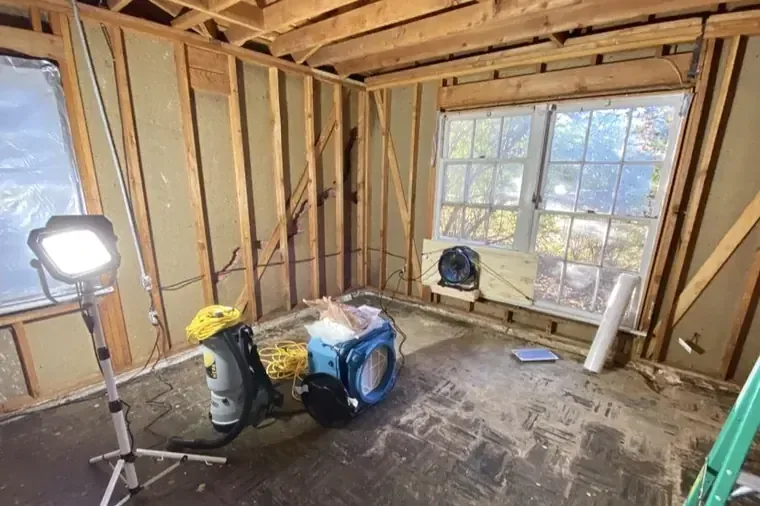 Basement Water Damage in RocklandLower level water is pumped out, then walls, floors and stored belongings are dried and checked for hidden moisture.See the service
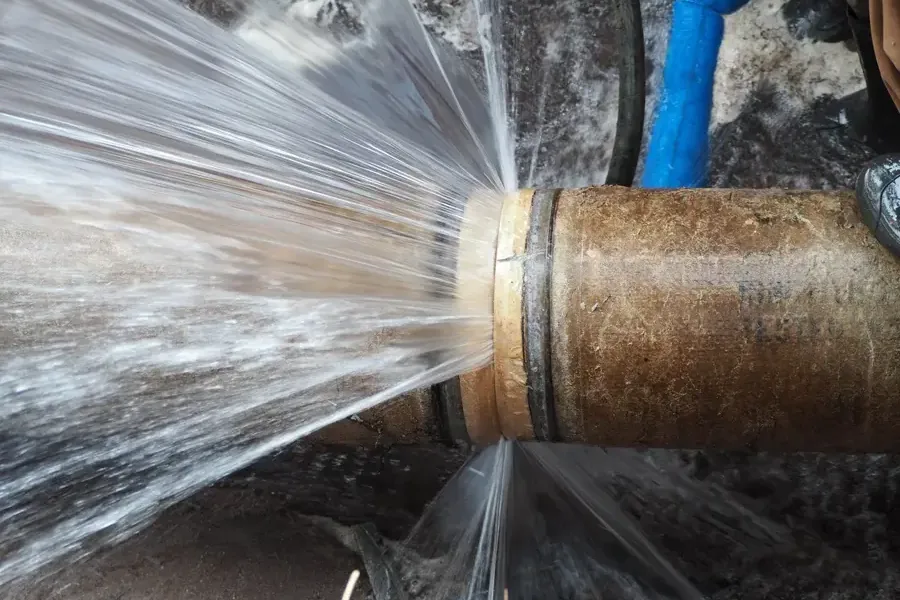 Burst Pipe Cleanup in RocklandA burst supply pipe can release a lot of water fast, so the drying team extracts it and dries every wet surface.See the service
 Commercial Water Damage in RocklandMixed use buildings along Union Street and converted factory spaces need drying planned around tenants and daily business.See the service
Structural Drying in BraintreeAir movers, LGR and desiccant dehumidifiers run until readings meet the drying goal.See the service
Commercial Water Damage in RocklandMixed use buildings along Union Street and converted factory spaces need drying planned around tenants and daily business.See the service
Structural Drying in BraintreeAir movers, LGR and desiccant dehumidifiers run until readings meet the drying goal.See the service
 Water damage restoration in RocklandEach service below covers a different way water enters a building, from a split pipe to a backed up drain.Open the town page
What is structural drying?
It is the controlled removal of moisture from framing, floors and walls after water is extracted, using air movers, dehumidifiers and meters.
How do I know the structure is dry?
Meters compare wet materials with unaffected ones, and equipment stays until readings match the dry goal.
Why not just open windows?
Outdoor air can be as damp as indoor air, and uncontrolled airflow can spread moisture. Dehumidifiers control the process.
Can walls stay closed during drying?
Sometimes, with small holes for airflow, but saturated insulation and board usually need to be opened.
Why are several machines running?
Air movers evaporate the moisture and dehumidifiers collect it. Each is placed to suit the size and shape of the wet area.
Does drying prevent mold?
Fast, complete drying removes the moisture that mold needs, which is the main reason timing matters. Readings prove the drying is finished.
Wet structure? Start drying now
Wood and drywall hold moisture long after the water is gone, so measured drying protects framing and finishes from lasting harm.
(888) 480-6221Call about drying now