Basement Water Damage in Braintree, MA
In a Braintree home with a basement, the lowest level is where seepage, a split pipe or a backed-up drain ends up. The restoration team pumps it out, removes wet finishes and dries the slab and walls to a verified reading.
(888) 480-6221Basement wet? Start the pump-out now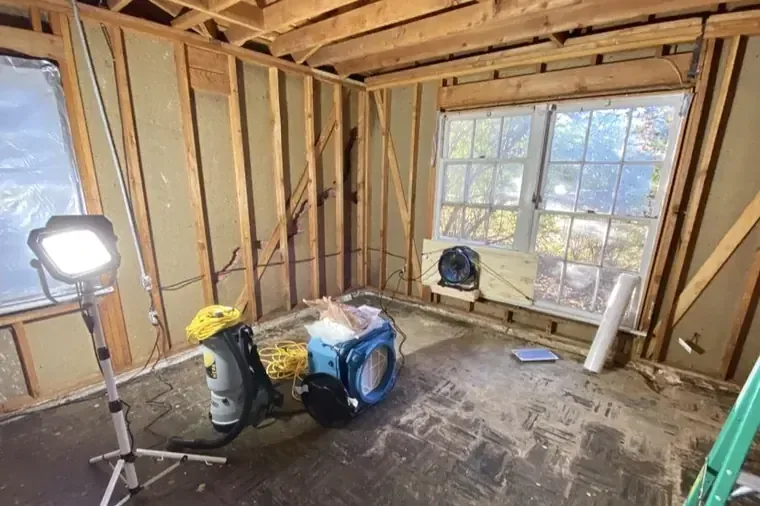
What to do when water shows up in the basement
Do now
- 1Shut the water off. If a pipe is running, close the main shutoff near where the service enters the foundation
- 2Kill basement power. Switch off basement circuits, the washer and the dehumidifier if the panel is dry and reachable
- 3Check the sump pit. Look for a pump that is stuck, unplugged or tripped, without stepping into deep water
- 4Photograph the waterline. Shoot the water depth on walls, the furnace base and stored boxes for the claim
Hold off
- Wading in near a submerged outlet or furnace
- Pumping a flooded basement dry while the ground is still saturated
- Leaving stored cardboard boxes sitting in the water
How the restoration crew handles basement water damage
A basement dries from the water out: standing water first, then the wet finishes that hold it, then the slab, walls and framing.
Around-the-clock response
The response team rolls out day and night, storm nights and holidays included, and treats active water as urgent.
IICRC S500 drying standard
The drying team pulls equipment only when meter readings say dry, not when a surface looks dry.
Claim-ready drying records
Moisture maps, daily psychrometric readings and timestamped photos go into one log for the adjuster and the owner.
Older South Shore construction
Fieldstone foundations, plaster walls, cast iron drains and finished basements are everyday work, so the crew checks below grade and behind the walls.
What does basement water damage cost in Braintree, MA?
In Braintree, MA, basement water damage cleanup typically runs $1,500 to $8,500. A clean-water leak in an unfinished basement sits at the low end; a finished lower level with carpet, drywall and a floor drain backup sits at the high end.
- Unfinished, clean water$1,500 to $3,000
- Pump-out and extraction
- Slab and wall drying
- Daily readings
- Finished lower level$3,000 to $8,500
- Carpet, pad and lower drywall removed
- LGR dehumidifiers for days
- Framing dried in place
- Drain backup or seepage$4,500 to $14,000+
- Category 2 or 3 handling
- Porous finishes removed
- Antimicrobial and containment
Price moves with the water category, the wet square footage, the material class and how quickly drying began. The water damage cost calculator gives a planning range.
The basement water damage process, step by step
- 1
Pump-out
The extraction crew drops submersible pumps into the deepest water and sends it outside, away from the foundation.
- 2
Remove wet finishes
Soaked carpet, pad, lower drywall and wet insulation come out, photographed first for the insurance file.
- 3
Dry slab and walls
LGR dehumidifiers and air movers run with the basement closed off, since damp outside air slows the work.
- 4
Verify and log
Readings on slab, walls and framing are logged daily until they reach the drying goal.
Basement water damage in Braintree follows the age of the town and its weather. Settled in 1635 and grown by more than half in the 1920s, the town mixes older and newer homes. Fieldstone, block and poured foundations can all let water in at cracks and the floor-wall joint, and a long nor'easter tests every one of them.
Where basement water comes from
- Groundwater pushing through cracks and the floor-wall joint after a nor'easter.
- A sump pump that fails or cannot keep up in a downpour.
- A supply pipe, water heater or washer hose that lets go.
- A floor drain or sewer lateral backing up.
Pipe water starts clean, but water sitting on a basement slab picks up dirt and becomes Category 2 within a day or two. Seepage and drain backups are treated as Category 2 or 3 from the start. See sump pump failure cleanup when the pump is the cause.
Why finished basements lose their carpet and lower drywall
Carpet pad holds water like a sponge, and drywall wicks it upward. Pad is almost always removed, and drywall is cut above the wet mark when readings show it cannot dry in place. Every cut is photographed before it happens for the claim file.
Drying a basement in a damp climate
Basement air stays cool and damp, so LGR dehumidifiers do most of the work while air movers sweep the slab and walls. Windows stay closed during humid weather. The EPA indoor air quality pages explain why a damp basement affects the whole house, and FloodSmart.gov explains how flood coverage treats a basement.
Where basement water damage is handled around Braintree
The restoration crew works ZIP codes 02184 and 02185, from the South Shore Plaza area and Great Pond to Weymouth Landing and the streets around Sunset Lake, plus Weymouth, Quincy and Holbrook nearby.
Browse the full coverage mapRelated water damage services
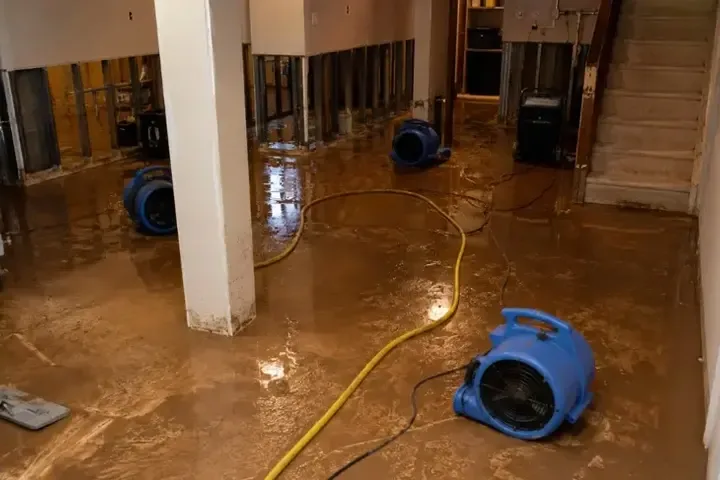 Sump Pump Failure CleanupStalled, swamped or unpowered pumps, with the basement slab and walls dried.See the service
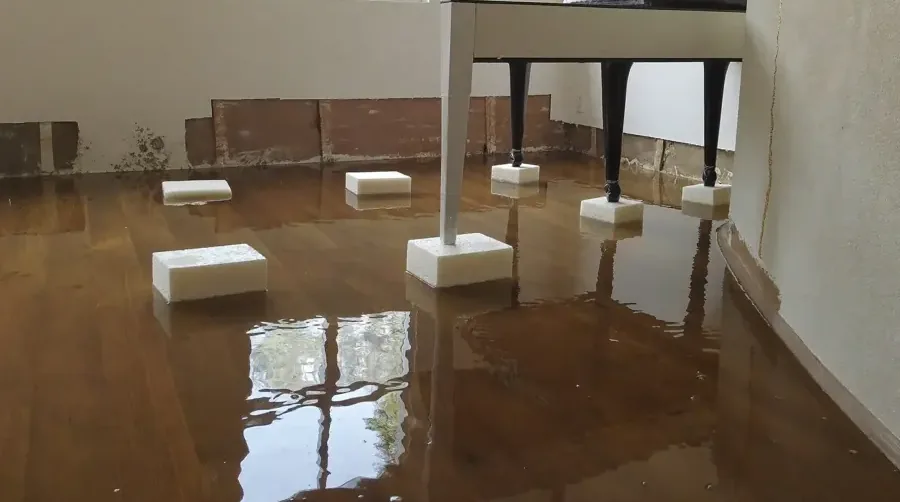 Water ExtractionTruck-mounted and portable extraction pulls standing water before it wicks into pad, subfloor and walls.See the service
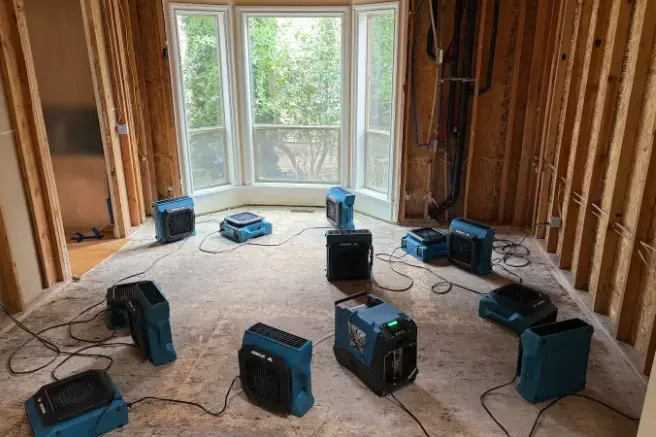 Structural DryingAir movers, LGR and desiccant dehumidifiers run until readings meet the drying goal.See the service
How do I know water is getting into my basement?
Common signs are a musty smell, a damp band at the bottom of the walls, white mineral streaks on the foundation, rust on appliance feet or a wet floor after rain.
Can a finished basement be dried without tearing it out?
Sometimes. Clean water caught quickly may dry in place with drywall and framing monitored by meters. Pad usually comes out, and anything touched by Category 3 water is removed.
Why does the basement flood after a nor'easter?
Saturated soil pushes water against the foundation and through cracks and the floor-wall joint. Heavy rain also tests the sump pump and the window wells.
How long does basement drying take?
Four to seven days is typical for slab, walls and framing. Fieldstone walls, plaster and a long delay before drying started can add days.
Is basement water covered by insurance?
A burst pipe or appliance leak is commonly covered. Seepage and flood water are often excluded or need separate coverage. Check your own policy with your insurer.
Should the basement windows be opened to dry it?
Usually not in humid weather. Warm, damp outside air condenses on the cool slab and walls, and dehumidifiers drying a closed space work faster.
Water in your Braintree basement? Call now.
The restoration team pumps the basement, removes what is soaked and dries the slab and framing to a verified reading.
(888) 480-6221Start drying the lower level