Commercial Water Damage in Weymouth
Weymouth Landing is redeveloping its older commercial district, and the town also holds medical offices, a hospital, schools and the Union Point redevelopment area. Each building type loses water differently, and each needs a different plan.
(888) 480-6221Business water loss? Call the commercial crew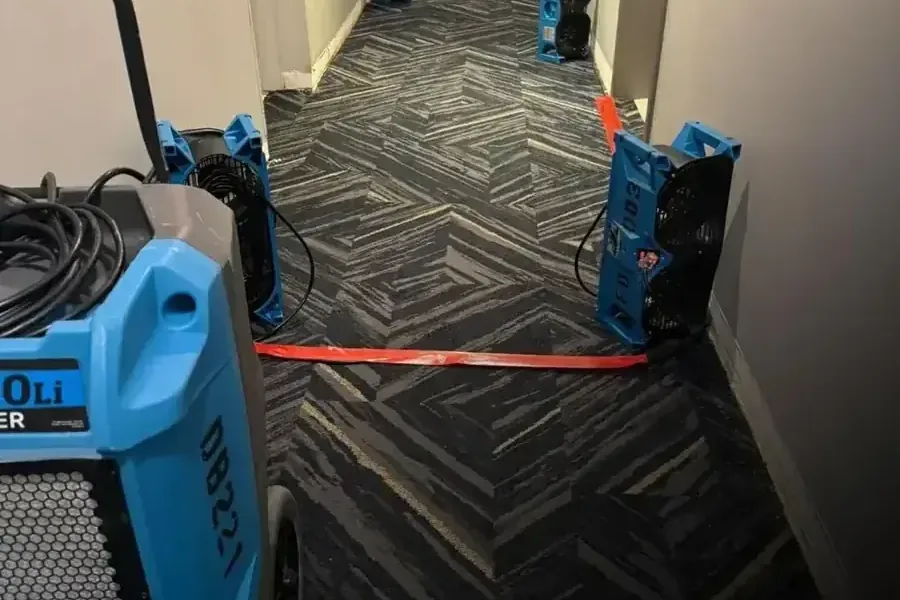
First steps after a commercial water loss
Do now
- 1Stop the source. Close the supply valve or call building maintenance to isolate the failed pipe or fixture.
- 2Protect operations. Move records, stock and electronics off wet floors and cover equipment that must stay in place.
- 3Notify the owner. Tell the owner, property manager and insurer, and keep a dated record.
- 4Photograph the loss. Capture ceiling tiles, floors, contents and the source before cleanup begins.
Hold off
- Do not power up wet electronics
- Skip reopening the space before readings
- Do not discard inventory before it is logged
How the restoration crew handles commercial water damage
Business losses often involve a sewage backup or an upstairs pipe failure, and the commercial plan adds documentation for managers and insurers.
Around-the-clock response
The response team rolls out day and night, storm nights and holidays included, and treats active water as urgent.
IICRC S500 drying standard
The drying team pulls equipment only when meter readings say dry, not when a surface looks dry.
Claim-ready drying records
Moisture maps, daily psychrometric readings and timestamped photos go into one log for the adjuster and the owner.
Older South Shore construction
Fieldstone foundations, plaster walls, cast iron drains and finished basements are everyday work, so the crew checks below grade and behind the walls.
What does commercial water damage cost in Weymouth, MA?
Commercial cost follows floor area, the number of units and the water category. A small suite or shop sits lowest, a large floor or several units sit in the middle, and a Category 3 loss or restaurant kitchen tops the range.
- Small suite or shop$3,000 to $8,000
- Water extracted
- Wet tiles removed
- Fans placed
- Large floor or several units$8,000 to $18,000
- Staged drying plan
- Carpet sections cut
- Written daily logs
- Category 3 or restaurant$18,000 to $30,000+
- Protective gear
- Sanitizing
- Extended drying
Price moves with the water category, the wet square footage, the material class and how quickly drying began. The water damage cost calculator gives a planning range.
The commercial water damage process, step by step
- 1
Isolate and assess
The wet zone is sealed off where possible, and meters map every floor, wall and ceiling section.
- 2
Extract and remove
Water is pumped, wet ceiling tiles and carpet are removed and salvageable stock is separated.
- 3
Dry in stages
Equipment is placed to keep other areas open, then shifted as sections reach their goals.
- 4
Report and release
A written log of readings and photos goes to the owner, manager and insurer.
Commercial buildings carry more at stake than a single room. A burst pipe above a corridor, a failed fixture in a restroom or a roof leak over a shop can interrupt tenants, stock and records all at once. The plan has to protect both the building and the business inside it.
A town with many building types
Weymouth Landing is the older main commercial district and is being redeveloped after years of blight. South Shore Hospital and Weymouth High School sit in South Weymouth, the district has eight primary schools and one early childhood center, and the former Stetson Shoe Company building, where shoemaking ended in 1973, now holds medical offices.
Redevelopment and infrastructure
Union Point, built on the former naval air station, is being redeveloped as a mixed use community with housing, commercial space and open space. The town negotiated an upfront payment from the master developer to fund continued water and sewer infrastructure upgrades, and new and old buildings alike depend on pipes that can fail.
What a commercial plan adds
- Staged drying so unaffected units can stay open
- Written logs for property managers, tenants and insurers
- Separate handling of Category 3 areas such as restrooms and kitchens
Each of those items matters when several parties share one building, and the readings come from the same structural drying method used in homes.
Where commercial water damage is handled around Weymouth
The restoration crew covers ZIP codes 02188, 02189, 02190 and 02191: Weston Park, Jackson Square and Whitman's Pond, Columbian Square and Union Point, Idlewell along the Fore River and the dense north end near Great Esker Park and George Lane Beach. Each walkthrough starts at the source of the water.
Browse the full coverage mapRelated water damage services in Weymouth
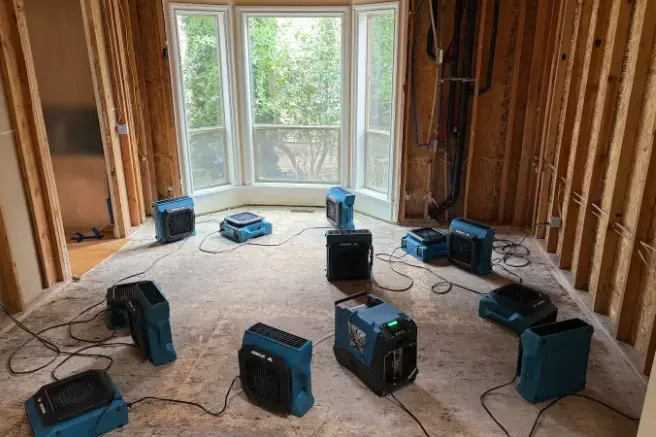 Structural Drying in WeymouthAir movers and LGR dehumidifiers run, with readings logged daily, until framing and subfloor meet the drying goal.See the service
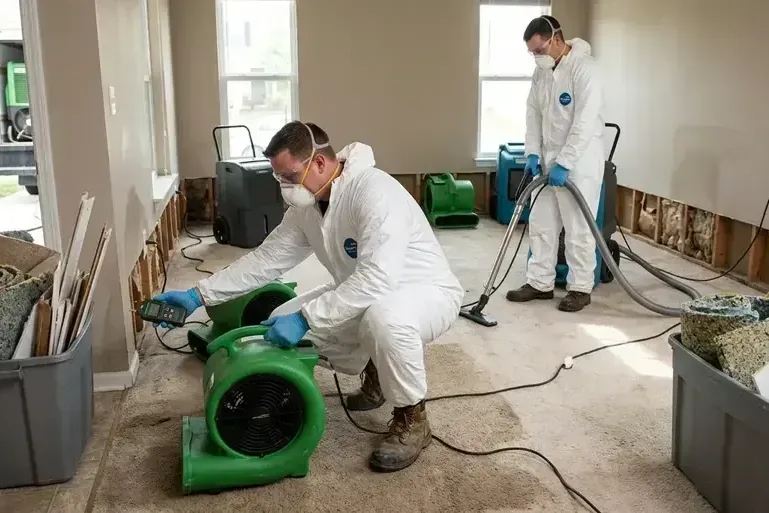 Sewage Backup Cleanup in WeymouthSewage that rises through a drain is contained, removed and treated as Category 3, with porous materials replaced.See the service
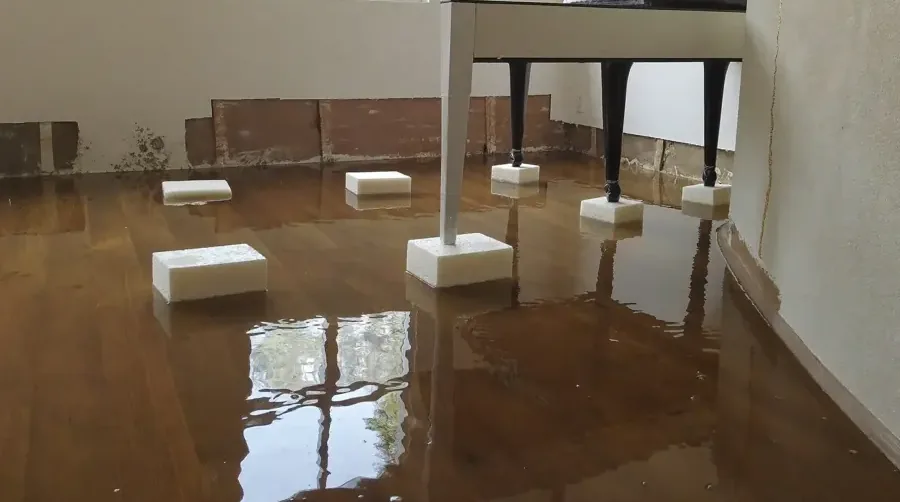 Water Extraction in WeymouthAfter a flash flood or a pipe failure, standing water comes out first with truck-mounted and portable units.See the service
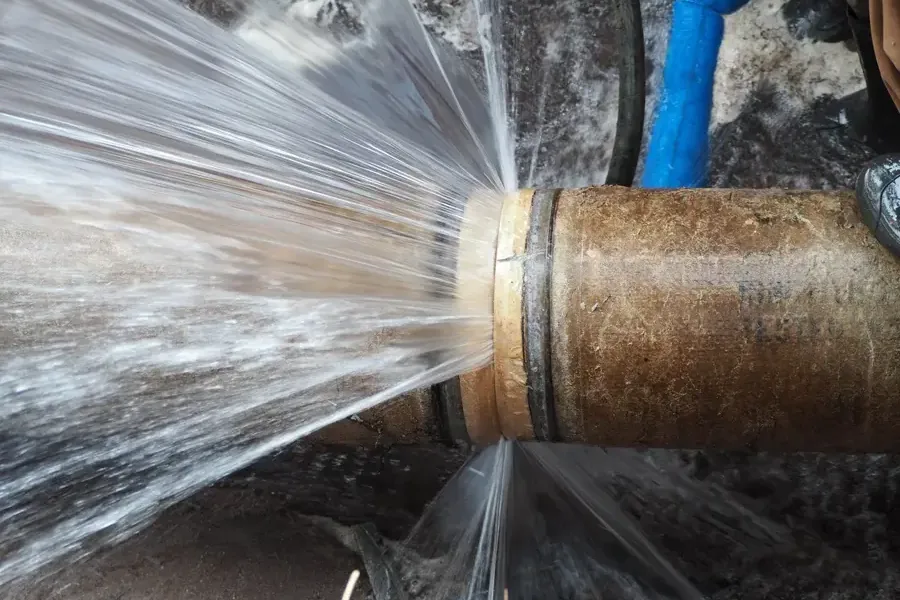 Burst Pipe Cleanup in WeymouthSupply pipes that give way under pressure or age pour water into walls and floors until it is extracted and dried.See the service
Commercial Water Damage in BraintreeShops, offices, restaurants and rental buildings dried in phases around business hours.See the service
Burst Pipe Cleanup in WeymouthSupply pipes that give way under pressure or age pour water into walls and floors until it is extracted and dried.See the service
Commercial Water Damage in BraintreeShops, offices, restaurants and rental buildings dried in phases around business hours.See the service
 Water damage restoration in WeymouthEvery service below follows the same IICRC S500 drying standard; each card opens the page for that kind of water loss.Open the town page
Can a business stay open during drying?
Often partly. Staged drying seals off the wet zone and keeps other rooms in use, though noise and equipment limit what is practical.
What records do commercial claims need?
Photos, moisture readings, an itemized scope and a list of removed stock or materials. Managers, tenants and insurers each ask for these, so the restoration team keeps one file.
How is a restaurant or medical suite handled differently?
Sanitary rules and contaminated sources raise the standard. Kitchen and restroom losses are often treated as Category 3, with protective gear, disinfecting and more removal.
Who decides what to save?
The owner and insurer decide, with the crew separating salvageable stock and flagging what cannot be restored. Porous items that touched contamination are discarded.
Does redevelopment change water risk?
New construction and older buildings both depend on pipes, roofs and drains that can fail. The town negotiated funding for water and sewer upgrades ahead of the Union Point redevelopment.
How quickly do commercial floors dry?
Drying time depends on floor area, materials and moisture, so there is no fixed schedule. Readings decide when equipment leaves.
Business water loss? Call now
The restoration team isolates the wet area, dries in stages and documents each step. Call now, any hour, to start.
(888) 480-6221Call the commercial crew