Structural Drying in Canton
Pulling water out is only half the job. The drying team in Canton sets air movers and dehumidifiers, reads the moisture in floors, walls and framing and keeps the equipment running until the numbers match a dry reference.
(888) 480-6221Dry-out for wet framing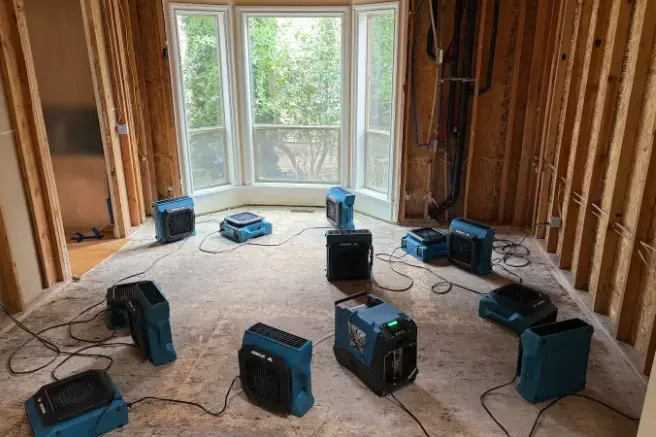
While the dry-out is underway
Do now
- 1Keep doors closed. Close off the drying area so conditioned air stays where the equipment can use it.
- 2Leave equipment running. Do not switch off air movers or dehumidifiers once they are set.
- 3Log observations. Note odors, new stains or damp spots and share them with the crew.
- 4Protect the cords. Keep cords clear of foot traffic and any standing moisture.
Hold off
- Do not move air movers to another spot
- Avoid opening windows in humid weather
- Skip turning the heat down while drying
How the restoration crew handles structural drying
Drying usually follows water extraction and applies equally to basement water damage, pipe losses and storm water of every kind.
Around-the-clock response
The response team rolls out day and night, storm nights and holidays included, and treats active water as urgent.
IICRC S500 drying standard
The drying team pulls equipment only when meter readings say dry, not when a surface looks dry.
Claim-ready drying records
Moisture maps, daily psychrometric readings and timestamped photos go into one log for the adjuster and the owner.
Older South Shore construction
Fieldstone foundations, plaster walls, cast iron drains and finished basements are everyday work, so the crew checks below grade and behind the walls.
What does structural drying cost in Canton, MA?
Drying cost follows the number of rooms, the types of material and how long the equipment must run. One room with light moisture is the smallest job, while dense materials such as hardwood, plaster or concrete push a job into the top tier.
- One room, Class 1 or 2$900 to $1,800
- Baseline readings
- Air movers placed
- Short equipment run
- Several rooms or a basement$1,800 to $3,200
- More dehumidifiers
- Daily monitoring
- Wall cavities checked
- Class 4 materials$3,200 to $4,500+
- Dense materials dried
- Specialty equipment
- Long monitoring
Price moves with the water category, the wet square footage, the material class and how quickly drying began. The water damage cost calculator gives a planning range.
The structural drying process, step by step
- 1
Take baseline readings
Meters and thermal images record moisture across floors, walls and ceilings before equipment is placed.
- 2
Place the equipment
Air movers and dehumidifiers are set to match room volume and the materials involved.
- 3
Check and adjust
Readings are repeated at each visit, and equipment is moved or added when a spot lags.
- 4
Confirm dry
Equipment is removed only after every material reads at the dry reference.
Drying is the same science after any loss, whether the water came from a pipe, a drain or a storm like the one on July 10, 2025, when 4 to 6 inches of rain fell in Canton, Quincy and North Scituate.
Why drying cannot be rushed
Wood, drywall and plaster release water slowly. Heat alone dries the surface and leaves the core wet, so dehumidifiers pull vapor from the air to keep the materials giving up moisture until they match a dry reference. Closing up a wall that still reads wet traps moisture against the framing and invites mold.
What the monitoring shows
- Moisture content readings on wood and drywall
- Temperature and humidity inside the room
- Thermal images that expose hidden wet pockets
Readings are logged at each visit, which gives owners and adjusters a clear record.
Planning the dry-out
Residents of Canton can ask the restoration team about a dry-out at any hour. For water that arrived from outside, see flood water cleanup, and for a split pipe, see burst pipe cleanup. Written readings from each visit give an adjuster proof that the structure was dried.
Where structural drying is handled around Canton
The town sits in Norfolk County at the foot of Great Blue Hill, with the Canton River running through its center toward the Neponset River. Wetlands lie along Route 138 on the eastern side and along I-95 on the western side, and the crew works across all of it.
Browse the full coverage mapRelated water damage services in Canton
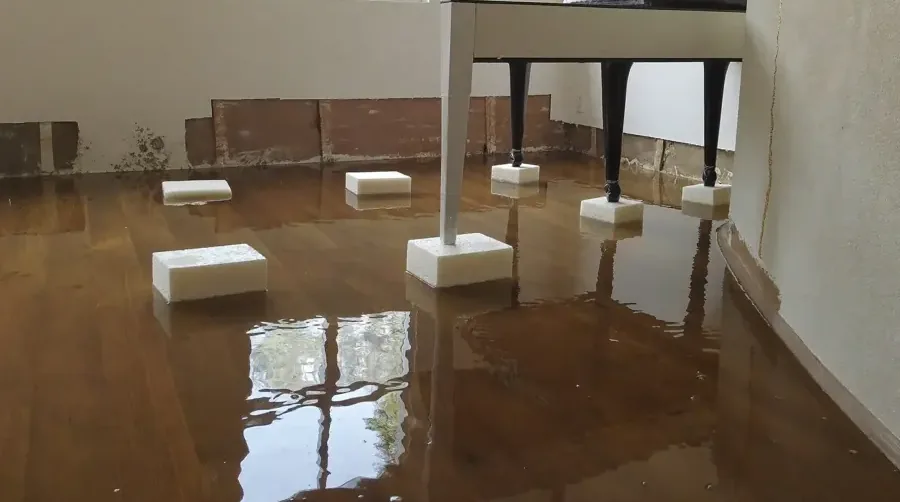 Water Extraction in CantonPumps and wands pull standing water off floors and out of carpet, the step that matters most after a downpour.See the service
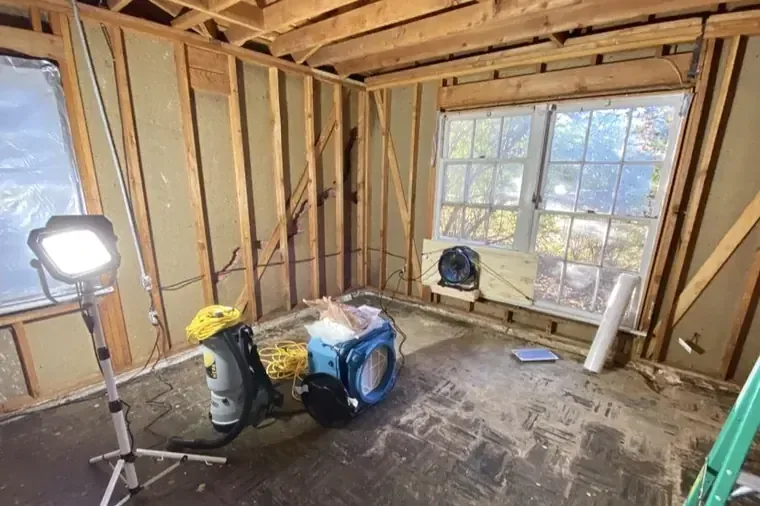 Basement Water Damage in CantonWet lower levels get pumped out, opened where needed and dried before damp reaches framing, drywall and stored belongings.See the service
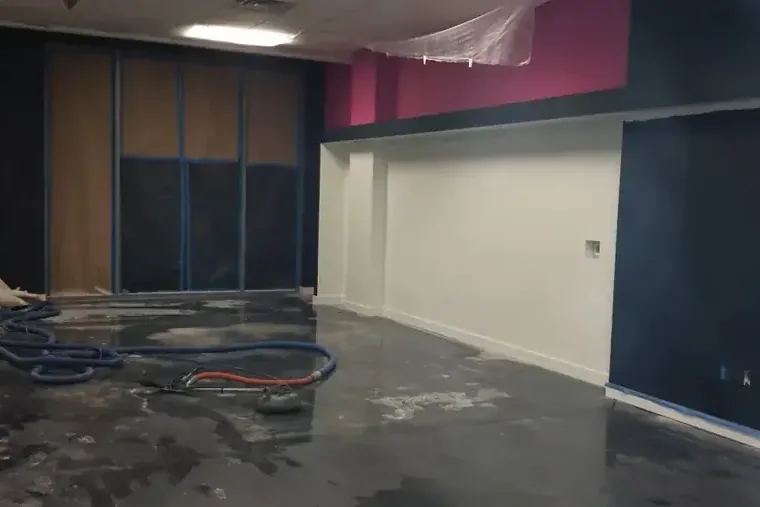 Flood Water Cleanup in CantonRising water from heavy rain or a swollen stream is removed, then floors and walls are cleaned and dried.See the service
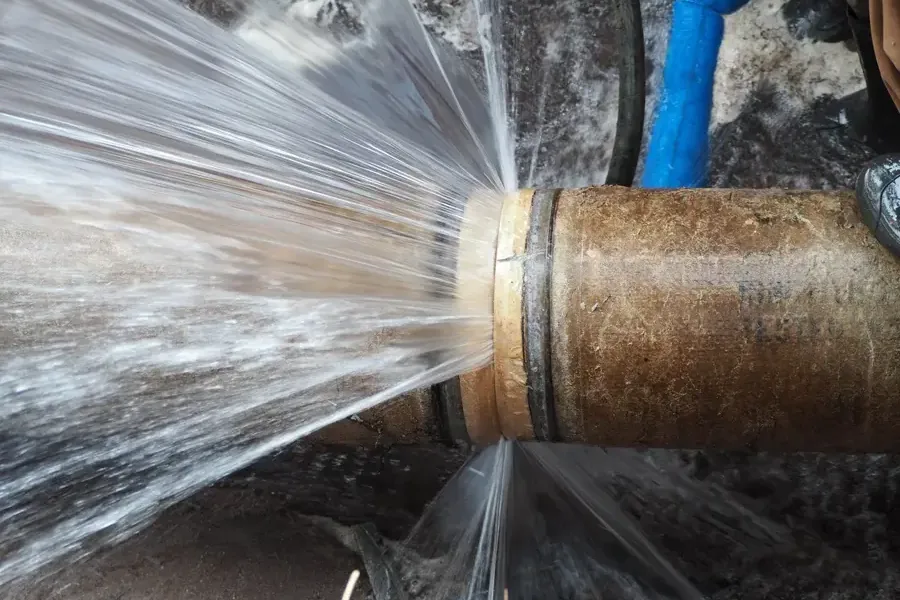 Burst Pipe Cleanup in CantonA split supply pipe sends water through floors and ceilings, and the drying team follows its path room by room.See the service
Structural Drying in BraintreeAir movers, LGR and desiccant dehumidifiers run until readings meet the drying goal.See the service
Burst Pipe Cleanup in CantonA split supply pipe sends water through floors and ceilings, and the drying team follows its path room by room.See the service
Structural Drying in BraintreeAir movers, LGR and desiccant dehumidifiers run until readings meet the drying goal.See the service
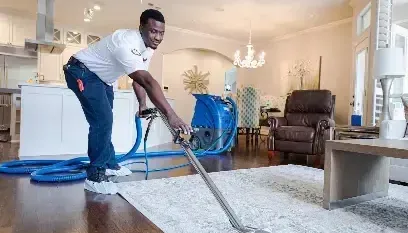 Water damage restoration in CantonWater loss takes many forms in town, from a supply pipe that gave way to a drain that backed up.Open the town page
How long does drying usually take?
It depends on the materials and the extent of wetting. Readings, not a calendar, decide when the equipment leaves.
Why are the machines so loud?
Air movers and dehumidifiers run continuously to move large volumes of air, and the noise is a sign the process is working.
Can the heat be turned up to speed things along?
Moderate warmth helps drying, but the crew sets the temperature so materials do not crack or warp.
Will the electric bill go up?
Equipment draws power for as long as it runs, so some increase is expected while drying continues.
What is a dry standard?
It is a reading taken from unaffected material in the same building, and wet materials are dried until they match it.
Can drying prevent mold?
Fast, complete drying removes the damp conditions mold needs, which is why it starts early.
Wet framing needs a measured dry-out
Describe which rooms were wet, and the drying team will size equipment and monitoring to the structure.
(888) 480-6221Phone about drying