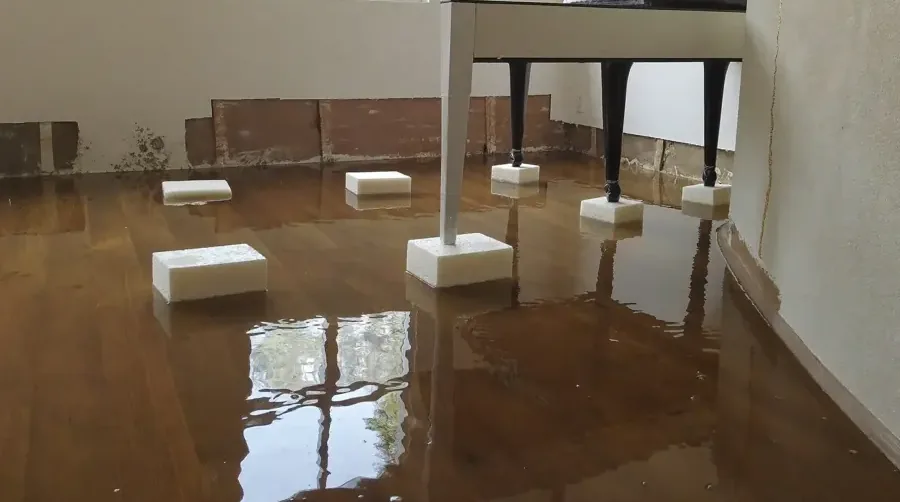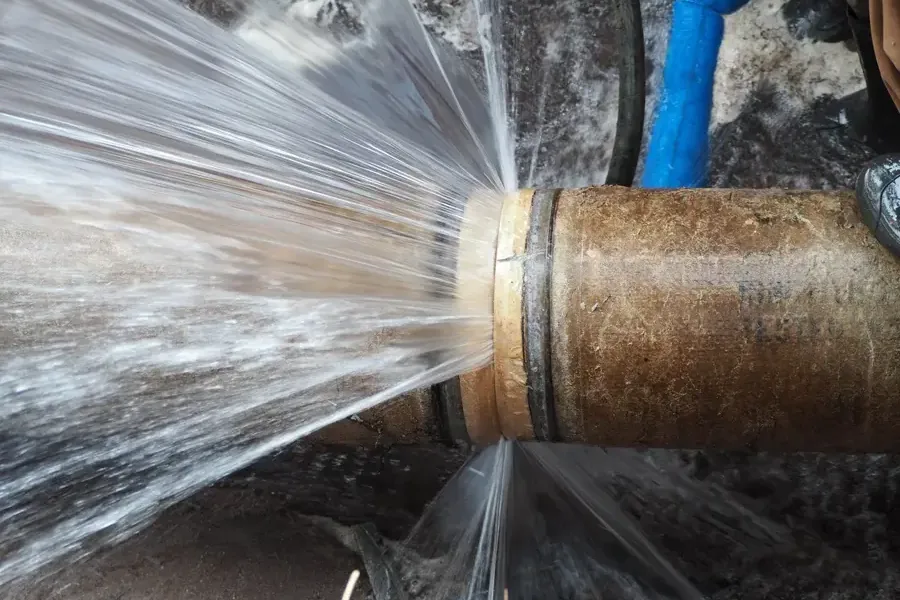
When a water main breaks in Stoughton, the street gets the attention and the town crews get the call. The water that ends up inside a house needs a different response, and the first hour decides how much of the building is affected.
Key takeaways
- The Stoughton Water Department services water main breaks, shutoffs, curb box turn-ons and water leaks.
- After business hours, a water main break is reported to the Police Department.
- A major break shut Pleasant Street between Lincoln Street and Union Street on June 26, 2023, and another main broke on Plain Street.
- The town fixes the main, while a plumber and the restoration team handle a split pipe or wet materials inside the house.
- Inside the house the order is the same every time: shut off the supply, make the area safe, extract the water and dry the structure.
Street main or house pipe: telling them apart
A water main is the large pipe under the street that feeds every house along it. A house pipe starts at the shutoff valve and runs through walls, floors and ceilings.
On June 26, 2023, a major water main break shut Pleasant Street between Lincoln Street and Union Street, and Pleasant Street could not be reached from Prospect Street, Chestnut Street or Grove Street.
A main also broke on Plain Street on a Tuesday evening, according to police, and water service was affected for some residents in the area.
Those were events for the town to handle. What a household sees afterward, whether low pressure, cloudy water or a wet floor, can come from the main or from the house, and the clues differ.
- Water bubbling up in the street or a washed-out patch points to the main.
- A wet wall, a ceiling stain or a drip inside points to a house pipe.
- Low pressure on the whole street suggests the main, while low pressure at one fixture suggests the house.
- A meter that keeps moving with every tap closed means water is escaping somewhere on the property.
Who to tell: the Water Department by day, the Police Department after hours
The Stoughton Water Department services water main breaks, shutoffs and turn-ons of curb boxes, and water leaks. After business hours, a water main break is reported to the Police Department.
Neither office repairs a pipe inside a house. For that, the household calls a plumber, and for the wet materials it calls a restoration team.
- Water Department: main breaks, shutoffs, curb box turn-ons and leaks on the town side.
- Police Department: main breaks reported after business hours.
- Plumber: supply pipes, fittings and valves inside the house.
- Restoration team: standing water, wet walls and floors, and drying.
When service stops and comes back
A main break often means water service is shut off for a stretch. When pressure returns, weak spots show up fast. A faucet left open, an ice maker hose or a loose washer hose starts running the moment service resumes.
The curb box is the shutoff at the street, and the house shutoff is usually where the pipe enters the building. Knowing where that valve is and how it turns saves time on a bad day.
- Close the faucets, then open the main shutoff slowly.
- Check under sinks, behind toilets and around the water heater for drips.
- Look at ceilings below bathrooms and kitchens for new stains.
- Watch the meter with every tap off to confirm nothing is running.
If water is inside the house
Stop the source
The supply valve closes first. If the pipe that split is inside a wall or ceiling, water keeps pooling above the drywall until it gives way, so a closed valve buys time.
Power to the wet area comes off from a dry spot, since wet outlets and light fixtures are a shock risk.
- Close the main shutoff.
- Turn off power to wet rooms from a dry location.
- Move valuables and small furniture out of the wet area.
- Photograph the water and the damage before cleanup begins.
Remove the water
Pumps and extraction units pull standing water off floors, and fast water extraction limits how far it climbs into drywall, cabinets and subfloors.
When a wall or ceiling holds trapped water, burst pipe cleanup covers opening it up so the cavity can dry.
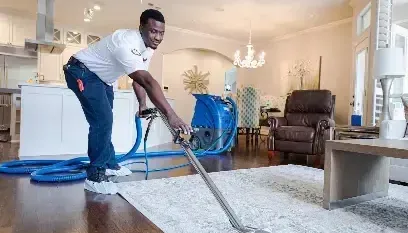
What the restoration crew does
After the water is out, the crew checks the structure with moisture meters and a thermal camera. Wet drywall and insulation that cannot dry are cut out, and the opened areas are cleaned.
Dehumidifiers and air movers then run until the readings match dry reference points. The same job is laid out on the main burst pipe cleanup service page.
- Mapping: meters and a thermal camera show where moisture hides.
- Opening: wet drywall and insulation are cut out where needed.
- Drying: air movers and dehumidifiers run until readings are normal.
- Records: readings and photos are logged for the insurer.
Records and the insurance claim
A main break outside is a matter for the town, but a loss inside a house is usually an insurance matter. The policy wording decides what is covered, and pipe failures, storm water and sewer backup are often treated differently.
The household can ask the insurer what documents are needed before work starts, and the crew keeps the readings and photos together with the invoice. More on the local side of this work is on the local water damage pages.
- Dated photos of the source, the water and the damage.
- A short timeline of what was noticed and when the supply was shut off.
- Moisture readings and equipment logs.
- Receipts for plumbing repairs and emergency costs.
Planning ahead for the next main break
A little preparation turns a stressful event into a short one. Most of it takes an afternoon and costs almost nothing.
The goal is to know where the shutoff is, to be able to turn it, and to have contacts and records ready.
- Find the main shutoff and the water meter, and check that the valve turns.
- Show every adult in the household where the valve is.
- Keep a flashlight, towels and a list of phone numbers for the plumber and the insurer.
- Photograph the rooms and major appliances, so a later claim has a clear starting point.
- Store valuables on shelves instead of the floor in rooms below bathrooms and laundry areas.