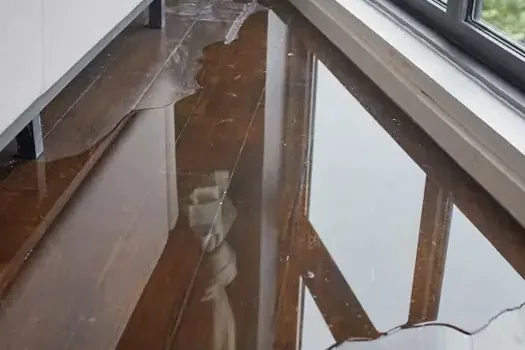
Water is part of Canton's map. The Canton River flows through the center of town, linking a chain of small lakes that includes Bolivar Pond and Forge Pond, before it reaches the Neponset River.
Key takeaways
- The river flows through the center of town, links small lakes including Bolivar Pond and Forge Pond, and flows into the Neponset River.
- Wetlands lie in the eastern part of town along Route 138 near the Randolph and Stoughton borders, and in the western part along I-95.
- On July 10, 2025, a flash flood warning covered Boston and areas to the south, and 4 to 6 inches of rain fell in Canton, Quincy and North Scituate.
- River, pond and runoff water is Category 3, so porous materials that touched it are removed and hard surfaces are cleaned and treated.
- Cleanup runs in order: safety, extraction, removal, cleaning and drying until readings are normal.
Water in the middle of town
The town lies at the foot of Great Blue Hill at an elevation of 98 feet, and its water runs through the middle.
The Canton River links a chain of small lakes, among them Bolivar Pond and Forge Pond, and then flows into the Neponset River.
The Neponset River forms the boundary between the town and its western neighbors Norwood, Westwood and Dedham. For a property owner this means ponds, a river and wetlands all sit within a short stretch of homes and businesses.
- River: runs through the center of town.
- Bolivar Pond and Forge Pond: part of the chain of small lakes the river links.
- Neponset River: forms the boundary with Norwood, Westwood and Dedham.
- Wetlands: found in the east along Route 138 and in the west along I-95.
What the July 10, 2025 rain totals show
On Thursday morning, July 10, 2025, a flash flood warning was issued for Boston and areas to the south as heavy rain pounded the area. Rainfall of 4 to 6 inches fell in Canton, Quincy and North Scituate.
That was a weather event. Reports from the day describe rainfall and a warning, not local damage. It still shows how much water a single morning can put on the ground.
When that much rain falls, the ground fills first, then streams rise and drains back up. Water that cannot soak in goes looking for the lowest point.
Why river and pond water is Category 3
River and pond water carries sediment, plant matter, animal waste and whatever washed in from yards and roads. The IICRC S500 standard rates it as Category 3, no matter how clear it looks once it settles.
The rating decides what is thrown out and what is cleaned. Anything that acts like a sponge is a candidate for removal.
- Carpet, pad and rugs: removed and discarded.
- Drywall, insulation and baseboard that wicked the water: cut out above the wet mark.
- Tile, sealed concrete and metal: washed, treated and dried.
- Mattresses, sofas and stored paper: usually discarded.
The first hours inside a wet building
Flood water changes how a household should behave inside a building. The first hours are about safety, not cleaning.
Power comes off to wet areas from a dry spot, and the household stays out of standing water that may touch outlets or wiring. Boots, gloves and eye protection are the minimum for any entry.
Floor level items go up first, and small valuables, papers and electronics are best moved to a dry shelf before the crew arrives.
- Photograph the high-water mark on walls and furniture before anything moves.
- Shut off the main water valve if a pipe is also leaking.
- Skip the furnace and air conditioning while the ducts may be wet.
- Keep children and pets out of the wet area.
- Keep receipts for pumps, fans, storage and other emergency costs.

Cleanup after water gets in
Extraction and removal
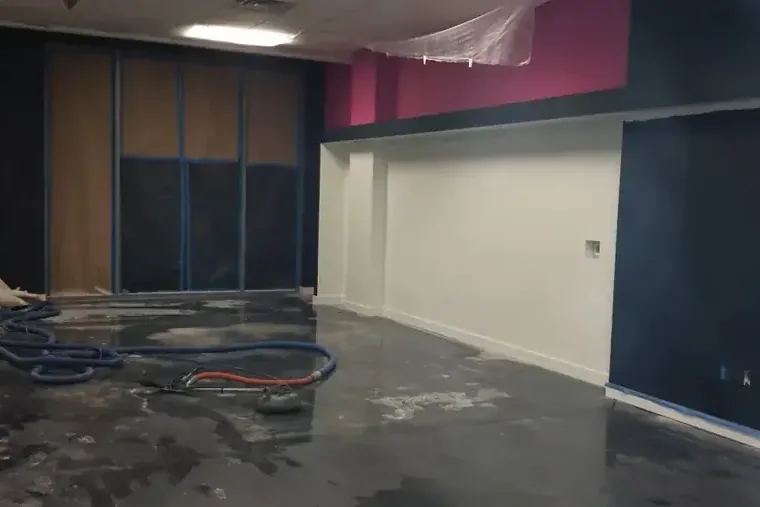
The extraction crew pumps out standing water first, since every extra hour lets it soak further. Flood water cleanup then moves to removing the porous materials that cannot be saved.
Photos are taken before anything is bagged, so the insurance list matches what was lost.
- Standing water pumped out first.
- Porous materials removed and bagged.
- Hard surfaces washed and treated.
- Air movers and dehumidifiers placed and checked until readings are normal.
Cleaning and drying
Surfaces that stay are washed and treated with an antimicrobial product. Air movers and dehumidifiers then run until moisture readings match dry reference points.
For storm driven water that came through a roof, window or wall, the steps are described under storm water damage.
How long drying takes depends on what the water soaked. A lower floor with concrete and framing releases moisture more slowly than a tile hallway, so the equipment stays until the readings agree.
Route 138, I-95 and the low ground near wetlands
Wetland edges are natural places for water to rest. Rain that would soak into dry ground lingers here, so a garage, a lower floor or a yard nearby can stay wet after the storm ends.
No flood prone street is named here, so this is a general reminder and not a map. A property owner near a wetland or pond can use the same short checklist after any heavy rain.
- Garage floors and door thresholds: look for water that has crept in under the door.
- Window wells: check for pooling against the glass.
- Sump pump pit: confirm the pump runs and the discharge is clear.
- Yard grading: look for water running toward the foundation.
Records and next steps
Coverage for flood and storm water depends on the policy, and the insurer decides what applies. The household can keep dated photos, a short timeline and receipts, and the crew adds readings and equipment logs.
For the wider picture of cleanup, see the main flood water cleanup service page and the local local water damage pages.
- Dated photos of the water, the damage and the contents.
- A short timeline of when the water came in and what was shut off.
- Moisture readings and equipment logs from the drying crew.
- Receipts for emergency costs such as pumps, fans and storage.